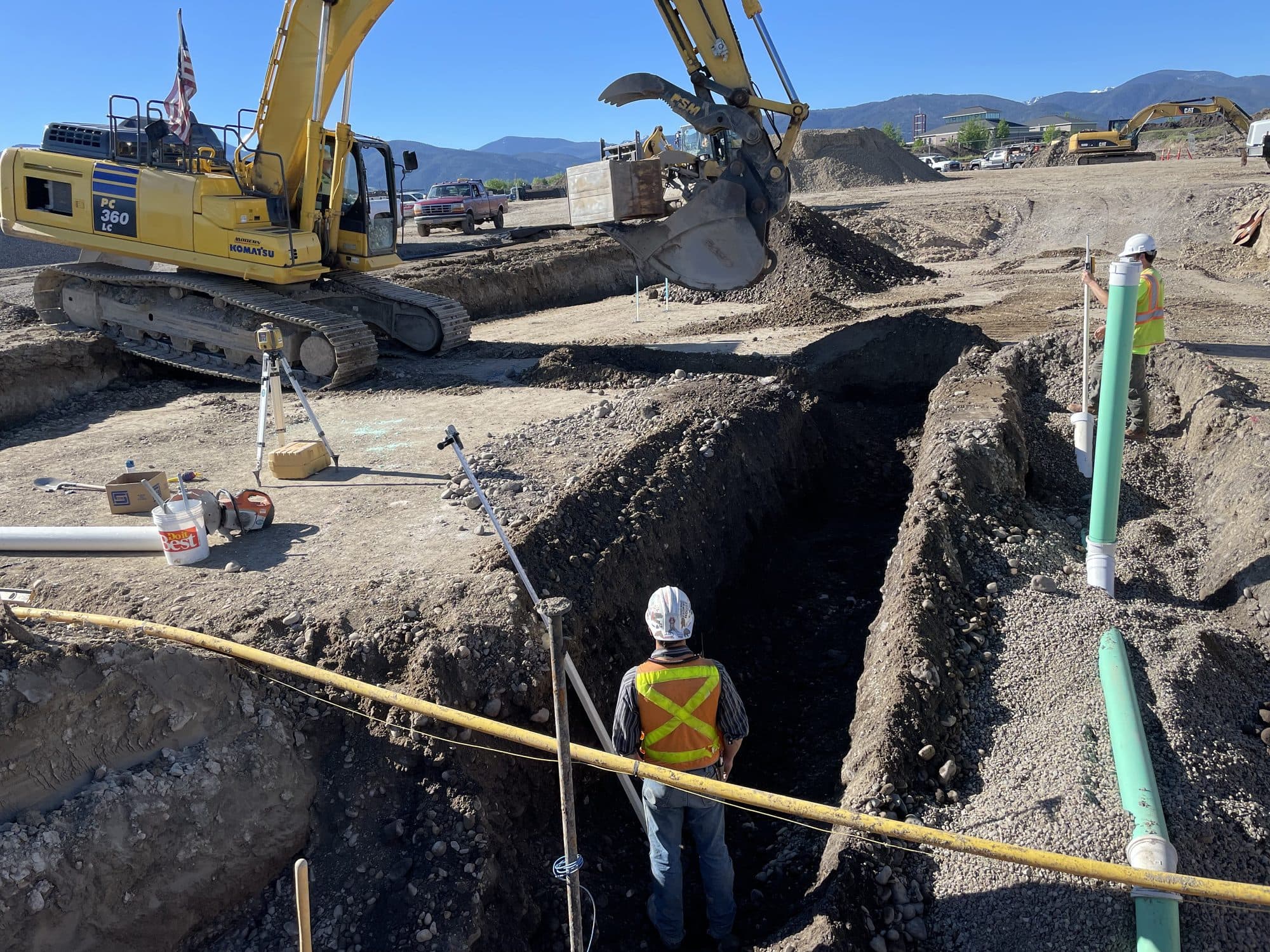
Call before you dig, and what the marks mean
Every job starts with a locate request, and the rules differ across the state line. North Carolina changed its law on 1 October 2025. An excavator now gives not less than three full working days notice before the proposed start date, and the notice expires twenty-eight calendar days after the work start date. The older three-to-twelve-day window and the fifteen-working-day ticket are gone, and a lot of material still online has not caught up.
South Carolina still works on the original pattern: notice between three and twelve full working days before excavation, and a ticket that expires fifteen working days after the time set for work to begin, renewable if the job runs long.
The paint and flags follow the same national color code in both states. Red is electric, yellow is gas, oil and steam, orange is communications, blue is potable water, green is sewer and drain, purple is reclaimed and irrigation water, pink is temporary survey marking and white is the proposed excavation itself.
Both states then define a tolerance zone around each mark: half the known diameter of the line plus twenty-four inches either side, or twenty-four inches either side of the mark where the diameter is not given. Inside that zone the line is exposed before mechanized equipment goes near it. Marks tell you roughly where something is, not exactly.
Depth, bedding and backfill
Burial depth is set by code, and by what the line is. Water service pipe in both Carolinas has to be at least twelve inches deep and at least six inches below the frost line, with the frost depth for your area set by the local building department rather than by a statewide number.
Buried electrical depends on the wiring method. The national cover table calls for twenty-four inches for direct-buried cable, eighteen inches for non-metallic raceway listed for direct burial, twelve inches for a GFCI-protected residential branch circuit at 120 volts or less on a 20-amp breaker, and six inches for rigid or intermediate metal conduit.
Gravity sewer is the exception, because the plumbing code regulates fall rather than depth. Horizontal drain piping smaller than three inches runs at a minimum of a quarter inch per foot, and three inches and larger at an eighth of an inch per foot. The depth of a lateral is therefore decided by where it has to tie in and how much fall it needs to get there.
What happens around the pipe matters as much as how deep it sits. Pipe bedded on graded material and supported along its whole length behaves itself. Pipe resting on rock with voids under it is a future repair, however good the fitting was.
Keeping water and sewer apart
The separation standard is ten feet horizontally between a water line and a sewer, and where the two cross, eighteen inches vertically with the water line above. North Carolina states it in both its public water supply rules and its sewer system rules, and South Carolina states it in its water system standards.
The reason is simple. A sewer is expected to leak eventually, and a water line under pressure that loses pressure will draw in whatever is around it. Distance and elevation are what keep one from reaching the other. Where a site genuinely cannot achieve the standard separation, both states set out alternatives, and those are engineered rather than improvised.