Trench safety is not a formality
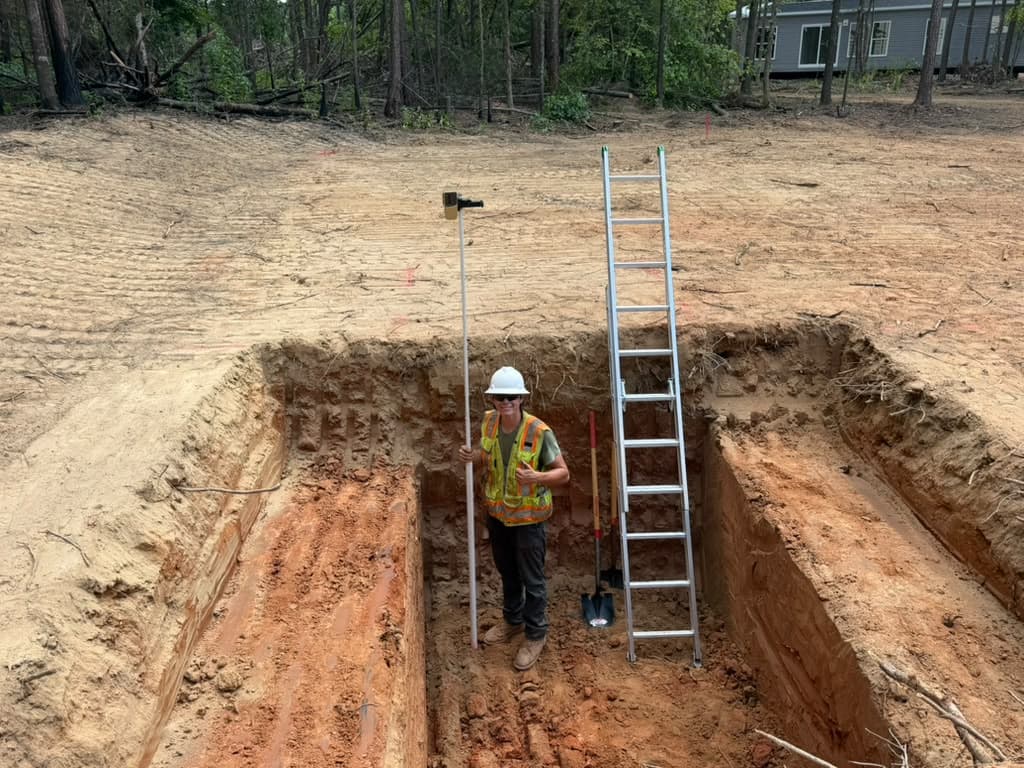
The federal excavation rules are the reason a job that looks simple is run the way it is. Anyone working in an excavation has to be protected from cave-in unless the excavation is cut entirely in stable rock, or it is under five feet deep and a competent person has examined the ground and found no indication of a cave-in. Sloping or benching deeper than twenty feet has to be designed by a registered professional engineer rather than judged by eye.
Inspections are daily, by a competent person, before work starts and again after every rainstorm or anything else that raises the risk, because a trench that was sound on Tuesday afternoon is a different trench on Wednesday morning. Spoil and equipment stay at least two feet back from the edge, and any trench four feet or deeper needs a ladder, ramp or stairway within twenty-five feet of lateral travel of anyone working in it.
None of that is optional, and none of it is free. It is part of what a trench costs and how long it takes.
What is under the grass decides the number
Two lots that look identical from the road can price very differently, and the reasons are almost always below the surface. Depth drives everything, because depth decides whether a protective system is needed and which one. A high water table changes the method. Rock changes the method and the schedule.
Access decides what can physically reach the work, and a machine that fits through a garden gate moves less dirt per hour than one that does not have to. Then there is the material itself: spoil that can be balanced on site costs far less than spoil that has to be loaded and trucked, and haul distance is real money.
That is why an honest number comes from standing on the lot rather than from a satellite photo.
Protecting what is already there
On an occupied property, most of the care goes into the things that are not being dug. Trees worth keeping are protected at the drip line before equipment arrives rather than after. Silt fence and a stabilized construction entrance keep soil on the site and off the road. Where a septic system is in play, the drainfield and the reserve area are kept clear of traffic, because compacted soil over a drainfield is a repair nobody planned for.
Driveways, irrigation lines, buried utilities and the neighbor's driveway all belong on that list too. Tell us what matters to you before we start and it gets marked, instead of discussed afterwards.
Cut, fill, and what happens to the dirt
Topsoil comes off first and is stockpiled on its own, because it is the one material on a site you cannot cheaply buy back. It goes down again at the end for grass and planting, and it is the wrong material to build anything on.
Structural fill goes back in layers and is compacted as it goes, not tipped in one pass and rolled once at the top. Soil placed loose keeps settling for years, and it takes the slab, the patio or the driveway down with it.
Wherever the numbers allow, cut and fill are balanced on the site, because moving material across a lot is far cheaper than importing or exporting it by truck. What genuinely has to leave, such as stumps, demolition debris and unsuitable material, is loaded and hauled, and that part is priced by the load and the distance.