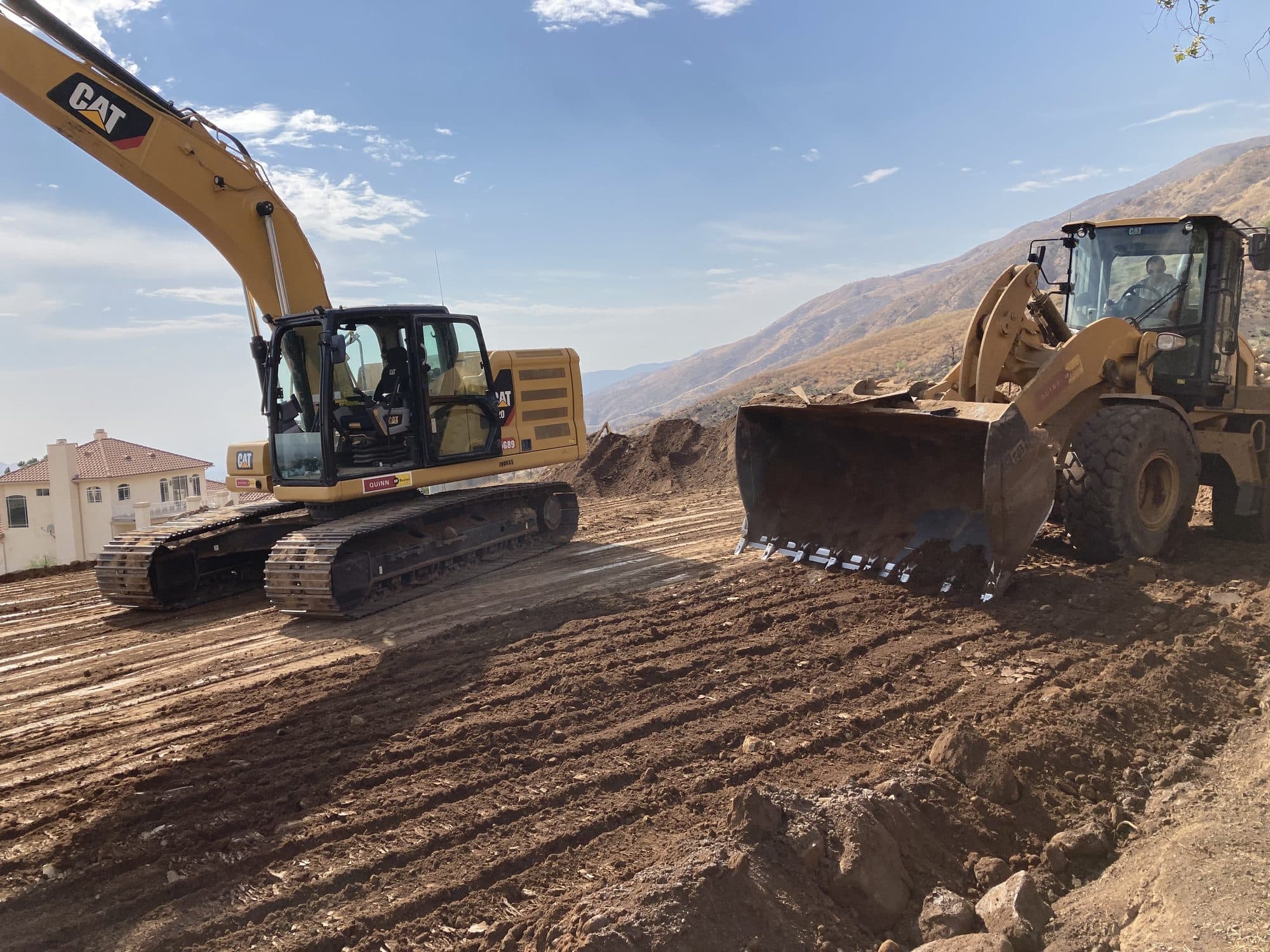
Grade is the cheapest waterproofing there is
The residential code both Carolinas build to is specific about this. Lots must be graded to drain surface water away from foundation walls, and the grade has to fall at least six inches within the first ten feet, which works out at about a five percent slope. Where a lot line, a wall or a slope makes that impossible, the code does not waive the requirement. It calls for swales or drains instead, and paving within ten feet of the foundation still has to slope at least two percent away from the building.
Six inches in ten feet is a small thing to get right while the machines are still on site, and an expensive thing to fix once the foundation, the driveway and the landscaping are in.
Swales, French drains, and where the water actually goes
A swale is a shallow vegetated channel that carries water across the surface. The EPA describes grassed swales as open channels that slow runoff so sediment settles and some of the water soaks in, which means a swale conveys and treats at the same time rather than moving a problem downhill faster.
A French drain is a trade term with no definition in the code. Its codified relative is the foundation drain: perforated pipe laid on at least two inches of washed gravel, the gravel extending a foot beyond the footing and six inches above it, wrapped in filter fabric so the stone does not silt up. The useful distinction is that a swale works on the surface and a French drain works below it.
Most standing-water complaints are a grading problem before they are a drainage problem, which is why the first thing worth checking is where the ground actually falls, not what pipe to bury.
When grading becomes a permitted land disturbance
Past about an acre, both states want paperwork before the first pass.
North Carolina requires an approved erosion and sedimentation control plan for any land-disturbing activity that will disturb more than one acre on a tract, filed thirty or more days before the work starts. It goes to the NC Department of Environmental Quality, or to the local erosion control program where a county or city runs its own, and a delegated local program is allowed to be stricter than the state.
South Carolina requires coverage under the state Construction General Permit from SCDES at one acre or more, with a notice of intent and a stormwater pollution prevention plan submitted before construction begins. A site under an acre still needs coverage if it is part of a larger common plan of development or sale. For genuinely small non-coastal jobs, a notification form to SCDES returns a letter confirming no further coverage is needed.
The two thresholds are not worded identically: North Carolina says more than one acre, South Carolina says one acre or more. Tell us the acreage and we will tell you which side of the line the job sits on.
What a finished grade has to do
A grade is finished when water has somewhere to go from every point on the site. That means no low spots holding water after a storm, any pipe daylighting where it can actually discharge, and clean tie-ins at the property lines so the new grade meets the old one instead of ending in a ridge.
It also means the water still leaves roughly the way it always did, just under control. A grade that cures your puddle by pushing it into the yard next door has not solved anything, it has moved the argument. Where that is a risk we say so on site rather than after the fact.